Alternatives to Texas Instruments INA122
Texas Instruments INA122 and its qualified second sources, compared on form/fit/function, stock, lifecycle and price — the same checks Parter runs inside a BOM.

Equivalent and substitute parts for Texas Instruments INA122
| INA122Texas Instruments | 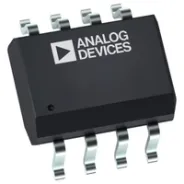 AD627ARZAnalog Devices AD627ARZAnalog Devices | INA126UATexas Instruments | +3more | |
|---|---|---|---|---|
| FFF Compatibility | Matches the industry-standard 8-pin pinout (RG on pins 1/8, inputs on 2/3, supplies on 4/7, REF on 5, OUT on 6) and is available in identical SOIC-8 and PDIP-8 packages.Offered in identical 150-mil SOIC-8 (R-8) and standard 8-pin PDIP (N-8) packages matching the dimensions of the original.Meets or exceeds all critical parameters, including supply range (2.2V to 36V), micropower consumption, and offers superior offset and noise performance. | Uses the exact same pinout footprint with identical pin assignments.Available in matching SOIC-8 and PDIP-8 package types.Minimum operating voltage is 2.7V (vs 2.2V for INA122), quiescent current is higher (175uA max), and it uses a different gain formula (G = 5 + 80k / RG) requiring a different resistor value. | ||
 AI Summary AI Summary | INA122 by Texas Instruments: Texas Instruments. | The AD627ARZ is the closest available drop-in replacement for the INA122, featuring an identical gain-setting resistor formula and exceptional micropower performance. It offers a direct match in supply voltage operating range with improved noise and offset characteristics.
| The INA126UA is a highly cost-effective, same-manufacturer alternative that shares a similar 2-op-amp micropower design. It is pin-compatible but requires minor design recalculations for the gain-setting resistor and a slightly higher minimum supply voltage.
| |
| Lifecycle Status | Active | Active | Unknown | |
| Market Availability | Non-stock | In stock | Unknown | |
| REACH | Unknown | REACH | Unknown | |
| RoHS | Unknown | RoHS | Unknown | |
| ——— ———— | ————— ——— ———— | ———— —————— | —— ————— ——— | |
| —————— —— | ——————— ———— | ————— ——— ———— | ———— —————— | |
| ———— ——— | —— ————— ——— | ——————— ———— | ————— ——— ———— | |
| —— ————— | ———— —————— | —— ————— ——— | ——————— ———— | |
| ——— ———— | ————— ——— ———— | ———— —————— | —— ————— ——— | |
| —————— —— | ——————— ———— | ————— ——— ———— | ———— —————— | |
| ———— ——— | —— ————— ——— | ——————— ———— | ————— ——— ———— | |
| —— ————— | ———— —————— | —— ————— ——— | ——————— ———— |
Unlock all 5 alternatives
Sign in with your work email to read every gated row on this table — description, lead time, origin, export control and the full technical data.
Sign in to unlockSigning in creates a free Parter account. We use your name and email to contact you about Parter — see our Privacy Policy.
- Find & compare verified second sources
- Spot risk early with real-time part monitoring
- Stay compliant and production-ready
Related parts
| Part | Market availability | Lifecycle | Alternatives available |
|---|---|---|---|
| INA169Texas Instruments | Non-stock | Active | 5Alternatives availableSee Alternatives |
 INA168NA/250Texas Instruments INA168NA/250Texas Instruments | In stock | Active | 5Alternatives availableSee Alternatives |
 INA114AUTexas Instruments INA114AUTexas Instruments | In stock | Obsolete | 5Alternatives availableSee Alternatives |
 INA228AIDGSTTexas Instruments INA228AIDGSTTexas Instruments | Non-stock | Obsolete | 5Alternatives availableSee Alternatives |
 INA208AIDTexas Instruments INA208AIDTexas Instruments | In stock | Obsolete | 5Alternatives availableSee Alternatives |
 INA301A2IDGKTTexas Instruments INA301A2IDGKTTexas Instruments | In stock | Obsolete | 4Alternatives availableSee Alternatives |
You searched one part. Parter watches your whole BOM.

All your BOM, at once
Parter maps every line to live stock, lead time, lifecycle and compliance data across the entire market — not part by part.

Hear about problems before they hit production
Allocation, EOL and last-time-buy notices surface the moment they appear, not when your buyer's PO bounces.

Qualified replacements in minutes, not days
Every at-risk line gets form-fit-function matches like the ones above — deltas flagged, evidence attached. Review, push to your BOM, and Parter starts watching the new part too.
Frequently asked questions
Yes. The Texas Instruments INA122 is active and in production. The parts listed here are qualified equivalents if you need a second source or better availability.
The closest qualified second sources for the Texas Instruments INA122 are the AD627ARZ (Analog Devices) and the INA126UA (Texas Instruments), out of 5 matched alternatives in total. Each is compared against the original on fit, form and function in the table above.
Not always. The alternatives to the INA122 are matched on function but can differ in package, pinout or a key parameter, so review the fit/form/function notes in the table and the datasheet before designing one in.
The INA122 (Texas Instruments) is a part in the Texas Instruments category. This page lists qualified, cross-referenced replacements for it with a side-by-side comparison.


Schedule a demo
See Parter in action
Discover how Parter can help your hardware team:
- Streamline your hardware operations with AI
- Detect and prevent lifecycle disruptions
- Accelerate product development
- Stay compliant and production-ready